

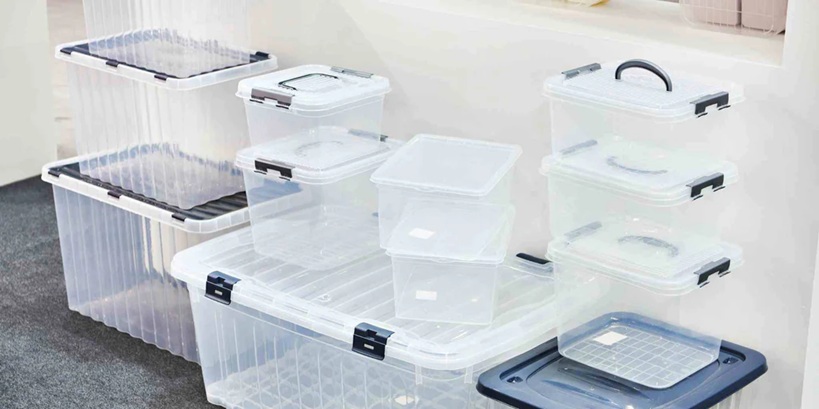
Any serious attempt to understand why some storage systems endure while others fail within months begins, inevitably, with the question of fit, and it is precisely that question of fit that makes choosing the right storage box Singapore residents and businesses can genuinely rely upon so much more consequential than it first appears. The mismatch between container and context is one of the most consistent and costly mistakes made across households and commercial operations alike. It is also, with a modest investment of attention, entirely avoidable.
Singapore presents a storage environment unlike most others. The combination of equatorial humidity, persistent heat, and some of the highest population densities on earth creates a set of demands that generic storage solutions frequently underestimate. A container that performs adequately in a temperate climate may warp, crack, or lose its sealing integrity within a few years of use in Singapore’s conditions. The materials, dimensions, and structural specifications that define a quality Singapore storage box are not incidental features. They are direct responses to the environment in which the container must function.
Why Materials Determine Longevity
The comparative approach to understanding materials yields clear conclusions. Across the range of substances used to manufacture storage boxes, plastic polymers, specifically polypropylene and high-density polyethylene, consistently outperform the alternatives under Singapore’s conditions.
Wood absorbs moisture and provides an inviting environment for mould and insect activity. Metal corrodes in humid, coastal air. Cardboard, still widely used in commercial settings, disintegrates under sustained humidity and offers no meaningful resistance to pests. Fabric containers provide flexibility but no structural integrity and no protection against moisture or insects.
Polypropylene, the standard material for general-purpose plastic storage boxes in Singapore, is lightweight, chemically resistant, and moisture-repellent. It tolerates the temperature variation between air-conditioned interiors and the ambient heat of storage rooms and corridors. Its translucency allows partial visibility of contents, reducing the need to open and reorganise containers during retrieval.
High-density polyethylene, or HDPE, represents a step up in structural terms. Denser and more impact-resistant than polypropylene, it is the material of choice for industrial storage boxes in Singapore subjected to heavy loads, frequent mechanical handling, and the kind of continuous operational stress that domestic containers are not engineered to withstand. HDPE also performs more reliably in Singapore’s heat without the surface fatigue that affects thinner-walled alternatives over time.
Polycarbonate sits at the premium end of the material spectrum. Fully transparent, significantly stronger than either polypropylene or HDPE, and capable of sustaining considerable temperature variation without deformation, it is used where the visibility of contents and the structural demands of the application both justify the higher cost.
Understanding Sizes Across Different Applications
The question of size is where many purchasing decisions go wrong. The instinct toward larger containers is understandable but frequently counterproductive. A container filled to capacity becomes a handling risk. Stacked, it introduces instability. Placed in a compact residential space, it occupies more room than its contents justify.
The more productive approach is to map container size to specific function:
- Under 10 litres: Desktop organisation, small components, craft and hobby supplies, items requiring daily access
- 10 to 30 litres: Household pantry storage, children’s belongings, bathroom and linen organisation, documents in active use
- 30 to 60 litres: Seasonal clothing, archived paperwork, garage and workshop storage, retail back-of-house inventory
- 60 litres and above: Warehouse and logistics applications, bulk commercial storage, industrial component management
For Singapore’s HDB residential market, the 20 to 40 litre range represents the most consistently practical choice. It aligns with standard wardrobe shelf depths, fits under beds with typical frame clearances, and can be managed by a single person without injury risk even when fully loaded. For storage box Singapore commercial buyers, the relevant question shifts from manageability to compatibility with racking systems and pallet footprints, which is an entirely different sizing calculus.
The Structural Specifications That Actually Matter
Beyond material and size, the structural details of a Singapore storage box determine how it performs under the specific stresses of real use.
Lid seal quality is the variable most consequential for Singapore’s domestic users. A lid that creates a genuine airtight seal protects stored fabric, paper, photographs, and electronics from the humidity that causes mould, yellowing, and corrosion over periods of months. A lid that merely rests in place provides the appearance of protection rather than the substance of it.
For commercial and industrial buyers, the critical structural features are:
Base reinforcement
Ribbed or corrugated base geometry distributes compressive load across a broader surface area, preventing the stress concentration at corners that leads to cracking under sustained stacking loads
Wall thickness consistency
Uneven walls create structural weak points that manifest under repeated handling or sustained pressure
Interlocking stacking profiles
Precisely engineered ridges that engage between stacked units prevent lateral movement and column instability in active warehouse environments
Load rating transparency
Quality industrial storage boxes carry clearly stated static and stacking load ratings, allowing buyers to match container specification to operational requirement with confidence
Buying Considerations Worth Applying
The diversity of storage box options available in Singapore is broad enough that undirected purchasing reliably produces suboptimal results. A structured set of questions narrows the field efficiently:
What will the container hold, and how much will it weigh when full? What environmental conditions will it face, including humidity, temperature, and chemical exposure? Does it need to integrate with existing shelving, racking, or pallet infrastructure? How frequently will it be accessed, and by what means?
These are not complicated questions. But they are the questions that distinguish a storage system that compounds its value over years of consistent use from one that generates the quiet, cumulative frustration of a poor fit. In Singapore, where the pressures of space and climate make storage a genuine daily challenge, the answers to those questions are the foundation of a genuinely useful storage box singapore solution.
